

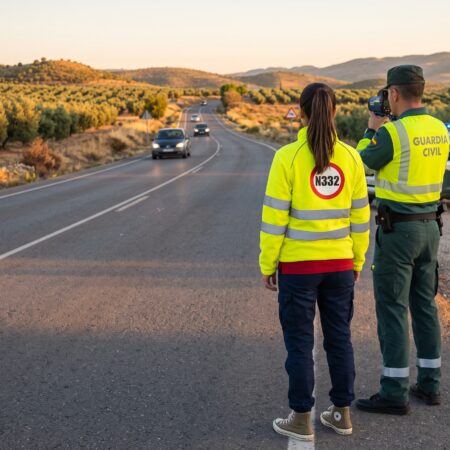
If you spend any time behind the wheel or riding shotgun with friends, you already know the vibe whenever someone spots a radar van parked by the side of the road. Everyone hits the brakes, mutters about speed traps, and checks their mirrors like they have just escaped a catastrophe.
Lately, the European Transport Safety Council—the group that tracks road safety data across Europe—has been calling on governments to clamp down even harder. They want more 30 km/h zones in towns, tighter surveillance on secondary routes, and section cameras that catch your average speed instead of just your pace at a single checkpoint.
It is easy to look at that and feel like the authorities just want to police every metre of tarmac. But when you look at the raw facts without the lecture, the real picture looks very different.
Physics Does Not Care About Excuses
When you are late to meet everyone, when your favourite track comes on, or when the person in the passenger seat is hyping you up, pushing past the limit feels harmless. You think your reflexes are sharp enough to deal with anything.
Here is what nobody tells you about the actual physics: at 50 km/h, if a pedestrian or someone on an electric scooter steps out from behind a parked van, their chance of surviving being hit drops dramatically. At 30 km/h, their survival rate jumps up to about 90 per cent. That is not government spin; it is basic kinetic energy.
When you travel faster, your stopping distance multiplies, your field of peripheral vision narrows, and the room you have to fix an unexpected mistake completely vanishes. On narrow town streets or twisting back routes, an extra 15 or 20 km/h turns a quick reaction into an unavoidable collision.
The Real Price of “Just Going With the Flow”
For those of us in our late teens and early twenties, keeping our licence is our entire independence. It is getting to work, driving out to the coast at the weekend, and not having to ask anyone for lifts.
In countries like Spain, novice drivers start with a reduced balance of just 8 points. Getting caught speeding in an urban street or blasting past an unmarked camera on a conventional road can wipe out half of those points in seconds, not to mention handing you hundreds of euros in fines. Once those points are gone, you are off the road.
Beyond points and fines, there is the human cost that gets swept under the carpet. Road crashes remain one of the biggest killers of young people across Europe. When a car loses control on a bend late at night, it is rarely just the driver who pays for it. It is your mates in the back, the families waiting at home, and the people whose lives change forever in half a second.
Why It Belongs to Us, Not the Cameras
Authorities can install section radars on every straight road, put up more digital signs, and order more mobile patrols. But cameras cannot tap your brakes when you approach a blind corner. Police cannot stop you from showing off when the car is full.
That responsibility sits entirely with whoever has their foot on the pedals.
If every one of us makes the conscious decision to drop the speed—to stop treating the road like a private circuit and stop letting passenger pressure dictate our driving—the numbers change overnight. Crash severity plunges. Emergency rooms see fewer trauma admissions. Friends actually make it home safe.
Taking your time is not about being slow, timid, or boring. It is about backing yourself, having total control over a piece of heavy machinery, and making sure everyone in your car gets where they are going in one piece. The cameras can keep flashing, but the choice that matters will always be ours.
Other Articles
Just brake for your life – You are not alone