



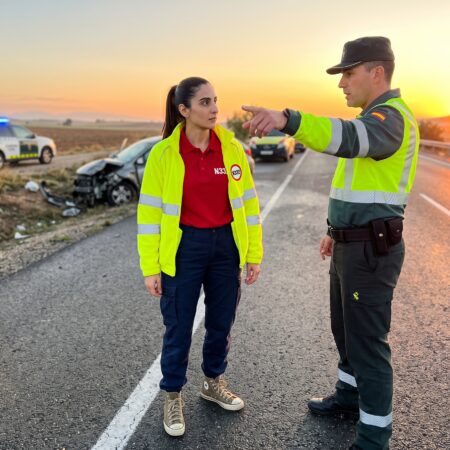
Two hundred and forty. That is the number of people who died on Spanish intercity roads this July and August. Mark will sit down with his spreadsheets and tell you that hospitalisations dropped by ten percent, or that a two percent drop across the year means the data is statistically stable within standard margins. But when you look past the percentages, two hundred and forty empty chairs at family dinner tables is not just data. It is a genuine tragedy.
We saw an absolute record on the highway network this summer with one hundred and two million journeys. Between dodging wildfire smoke, road closures managed by the Agrupación de Tráfico de la Guardia Civil, and the massive rush to watch the solar eclipse in August, millions of people were moving.
Yet, seventy-three percent of the fatal crashes happened on conventional secondary roads. Not the big dual carriageways. The regular routes where people let their guard down. Most were simply cars running off the tarmac or colliding head-on.
And then there are the details that genuinely break my heart because they are entirely preventable:
- Twenty-five people who died in cars and vans were not wearing seatbelts.
- Out of seventeen pedestrians struck down in the dark, thirteen were not wearing mandatory reflective gear on the road.
- Three cyclists died without a helmet.
Why do we take these risks? Is buckling a belt or putting on high-vis clothing really too inconvenient when our lives depend on it?
Now the government and the Dirección General de Tráfico are pushing hard to lower the general blood alcohol limit to 0.2 grams per litre of blood. Some drivers are already debating whether that allows for half a small beer or nothing at all.
You know I have spoken about this many times before. The debate over numbers misses the entire point. If you are going to drink, do not drive. If you are going to drive, do not drink. The only safe amount behind the wheel is zero. It is already the mandatory limit in Spain for anyone under eighteen, and honestly, the physics and biology do not magically change just because somebody turns older. Alcohol dulls reaction times regardless of age.
Road safety is not just about avoiding fines from the Guardia Civil. It is about understanding that a vehicle is heavy machinery, and our choices dictate whether someone else makes it home.