

 Spotify
 Amazon Music
 Apple Podcasts
 YouTube
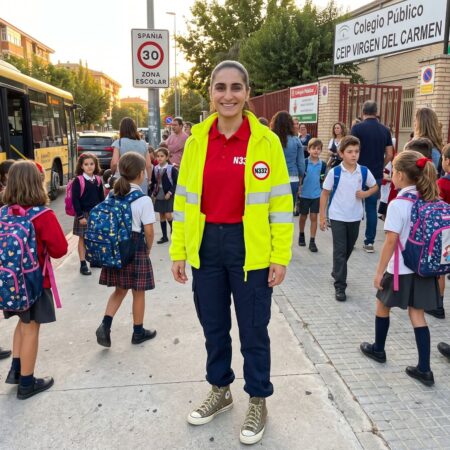
I think about this every September. The bell is about to ring. Cars double-park. Doors swing open. People rush because nobody wants to be late. In the middle of all that noise, there are small children who cannot see past a parked bonnet, and drivers who cannot see past their own windscreens.
It is easy to blame the traffic. But the traffic is just people.
Mark will tell you about the technical logistics, stopping distances, and traffic flow regulations. He will probably pull out a diagram. But to me, the real question is much simpler: what are we actually doing with our habits?
Here is what happens when you look at the human side of the school run.
The Danger Right at the Gate
The biggest hazard outside any school is not speed. It is unpredictability.
When parents stop directly in front of the entrance, the street becomes a maze. Cars reverse blindly. People open doors into the road. A younger student steps out from behind an estate car, and a passing driver has zero reaction time.
Does it actually make sense to fight for that space right outside the door?
It does not. Parking two streets away changes everything. You leave the chaos behind. You get a two-minute walk on the sidewalk. And suddenly, nobody is stepping into a blind spot.
The Pavement Side Rule
Which door opens when your car stops?
Children must always get out on the pavement side. Never into the road. A door opening into traffic takes half a second. A passing car, an e-scooter, or a cyclist cannot predict it. If you have younger kids in the back, an adult or an older passenger should control that door. It takes three seconds to check. That is all.
The Familiar Route Trap
Why do five-minute journeys carry so much risk?
Because familiarity makes us careless. When a route is routine, our brains switch to autopilot. We think, We are only going around the corner.
So someone skips the booster seat. Or the strap is twisted. Or a seat belt is clicked in halfway because “it is just two minutes.”
A collision does not check how far you plan to drive. The physics of an impact at thirty kilometres per hour are identical whether you are two hundred metres from your house or fifty kilometres away on an autovía. Taking thirty seconds before the wheels turn to make sure everyone is properly strapped in is not being fussy. It is just paying attention.
What the Law Requires in Spain
The rules set by the Dirección General de Tráfico are very direct on this point:
- Any child measuring 135 centimetres or less must use an approved child restraint system suited to their exact height and weight.
- They must travel in the rear seats. The only rare exceptions involve vehicles with no rear seats or rear seats already completely occupied by other child seats.
Kids grow fast over the summer break. A booster seat that fitted perfectly in June might not sit correctly across the chest and hips today. Check the straps. They must lie flat, not cutting into the neck, and never sliding down over the shoulder.
What Children Are Actually Learning
Children watch everything.
If we lose our temper in the queue, cut someone off, park across a pedestrian crosswalk, or glance down at a phone while waiting for the light to change, what are we teaching them? We are teaching them that convenience matters more than other people.
When we stay patient, wait our turn, and let someone cross safely, we show them what responsibility looks like in real time. They will remember that long before they ever get behind the wheel.
There is probably an answer to making school gates safer. We just have to choose to be the calm part of the morning.