

 Spotify
 Amazon Music
 Apple Podcasts
 YouTube
Hey everyone, Riley here.
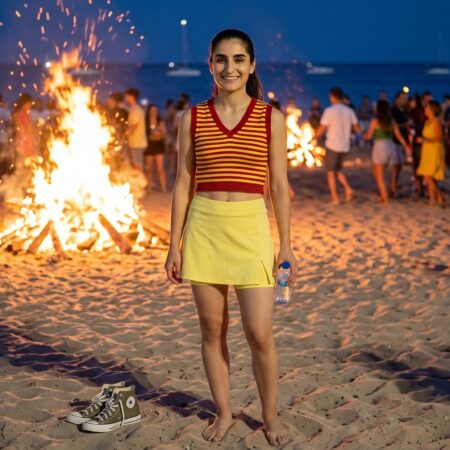
Tonight is the Noche de San Juan, and I know exactly where most of us are heading. The beaches are packed, the bonfires are ready to be lit, and there is no better way to kick off the summer than sitting around the fire with your crew, listening to music, and just letting go of exam stress or work fatigue. It is easily one of the best nights of the year.
But while we’re packing our bags and sorting out who is bringing what, there is a serious reality check we need to address before the sun goes down.
Right now, the Guardia Civil and local police forces are setting up a massive safety net flanking every single coastal access link, including the N-332. They are out there in force with multi-lane checkpoint funnels, digital breathalyzers, and rapid saliva-screening kits. They aren’t out there to ruin our night; they are out there because holiday periods like this are statistical magnets for severe road trauma.
If you’ve read my previous pieces, you know we’ve already broken down the hidden, permanent ripples of a collision—the first responders who bear the mental scars, the families whose lives are instantly shattered, and the victims left behind. We also laid down the unwritten law of our generation: real friends do not let friends drink or drug-drive. Period.
The Myth of being “Fine”
When the fires start dying down at 3:00 AM and everyone is exhausted, a quiet, dangerous social pressure kicks in. It’s rarely someone shouting at you to get behind the wheel. It’s that casual, lazy assumption when a mate says, “Come on, you only had a couple of drinks at the start of the night, you’re fine to drive,” or “Take the back roads, it’s a five-minute trip.”
We start playing this frantic, foolish guessing game in our heads. We think because we drank a coffee, had some food, or because we took a stimulant and feel totally wired and awake, that we have somehow cheated the biology of impairment.
Let’s look at the hard science. Alcohol is a central nervous system depressant that delays your micro-reactions long before you feel tipsy. But if you combine alcohol with illegal or prescription substances? The risk profile explodes. Data from the European Transport Safety Council (ETSC) proves that mixing substances creates a toxic trap, making a catastrophic crash up to thirty times more likely than driving sober. The stimulant tricks your conscious mind into feeling hyper-alert, while the alcohol completely strips away your natural risk aversion. You feel like an elite driver, but your peripheral vision has tunneled, your spatial tracking is broken, and you are operating a multi-tonne missile completely blind.
[ Clean Baseline: 1x Risk ] ➔ [ Single Intoxication: 5x Risk ] ➔ [ Combined Substance Trap: 30x Risk ]
The Real Test of Friendship
This is where we have to step up for each other. Looking out for your crew means locking in the transport plan before the first bonfire is lit. Who is staying sober? What taxi app are we splitting? What night bus route is running?
If a mate tries to reach for their keys after consuming anything, the conversation shouldn’t be awkward or up for debate. You take the keys. You call the cab. You let them sleep on your floor. Real solidarity isn’t letting someone make a fatal mistake because you didn’t want to cause a scene; it’s making sure everyone in your circle wakes up tomorrow to see the rest of the summer. The only safe limit is an absolute zero.
The Checkpoint Warning System is Broken
There is one final thing, and it’s a modern habit we have to kill off right now. We’ve all seen group chats lighting up with location drops, or drivers flashing their high beams on a dark rural road to warn oncoming traffic that a police checkpoint is around the corner.
We tell ourselves we’re doing a favor, protecting someone from a heavy fine or a lost license.
Let’s call it what it really is: complicity in potential manslaughter.
When you tip off an impaired driver to help them dodge a breathalyzer or a saliva test, you aren’t saving them. You are turning a blind eye while a dangerous, chemically altered vehicle is released straight back into public traffic. That driver doesn’t magically become safe because they took a detour. They stay compromised. And five kilometres down the road, when their delayed processing misses a hidden bend or a pedestrian crossing, they strike an innocent person walking home from the beach.
They create the exact permanent ghosts we investigated in our first episode. Checkpoints are the literal barrier between a great summer memory and a closed casket.
Tonight, let’s look out for each other. Enjoy the bonfires, have an incredible night, choose absolute zero, and keep the safety grid locations to yourself. Let’s ensure every single one of us makes it home alive.
These New Spanish Road Rules Are About Us
A Little Song From My School Days